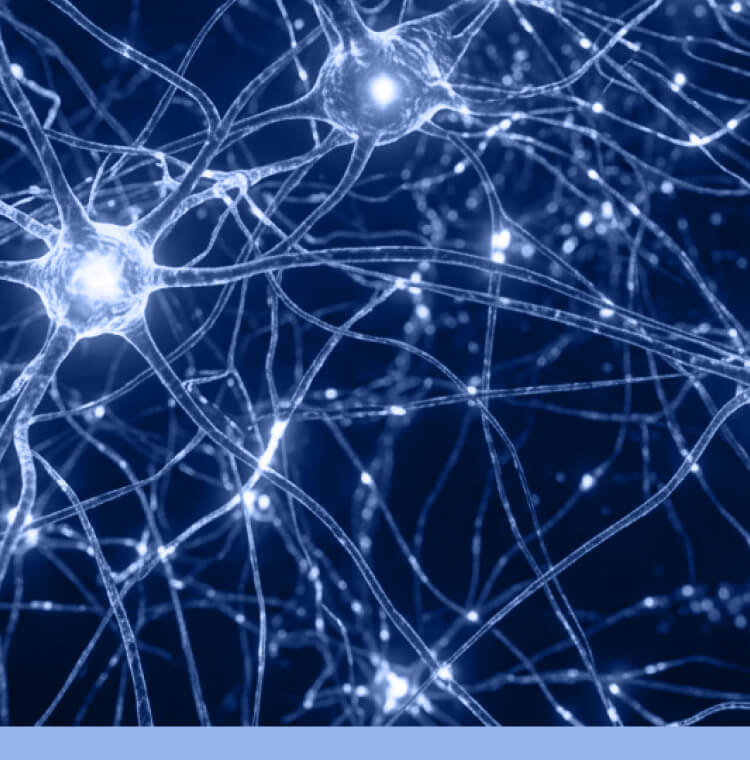
How Proliv®Rx Works
Proliv®Rx is an FDA-approved, prescription, physician-directed therapy delivered at home for patients who haven’t adequately responded to antidepressants.
Physicians direct care while patients complete a guided program with ongoing progress tracking.
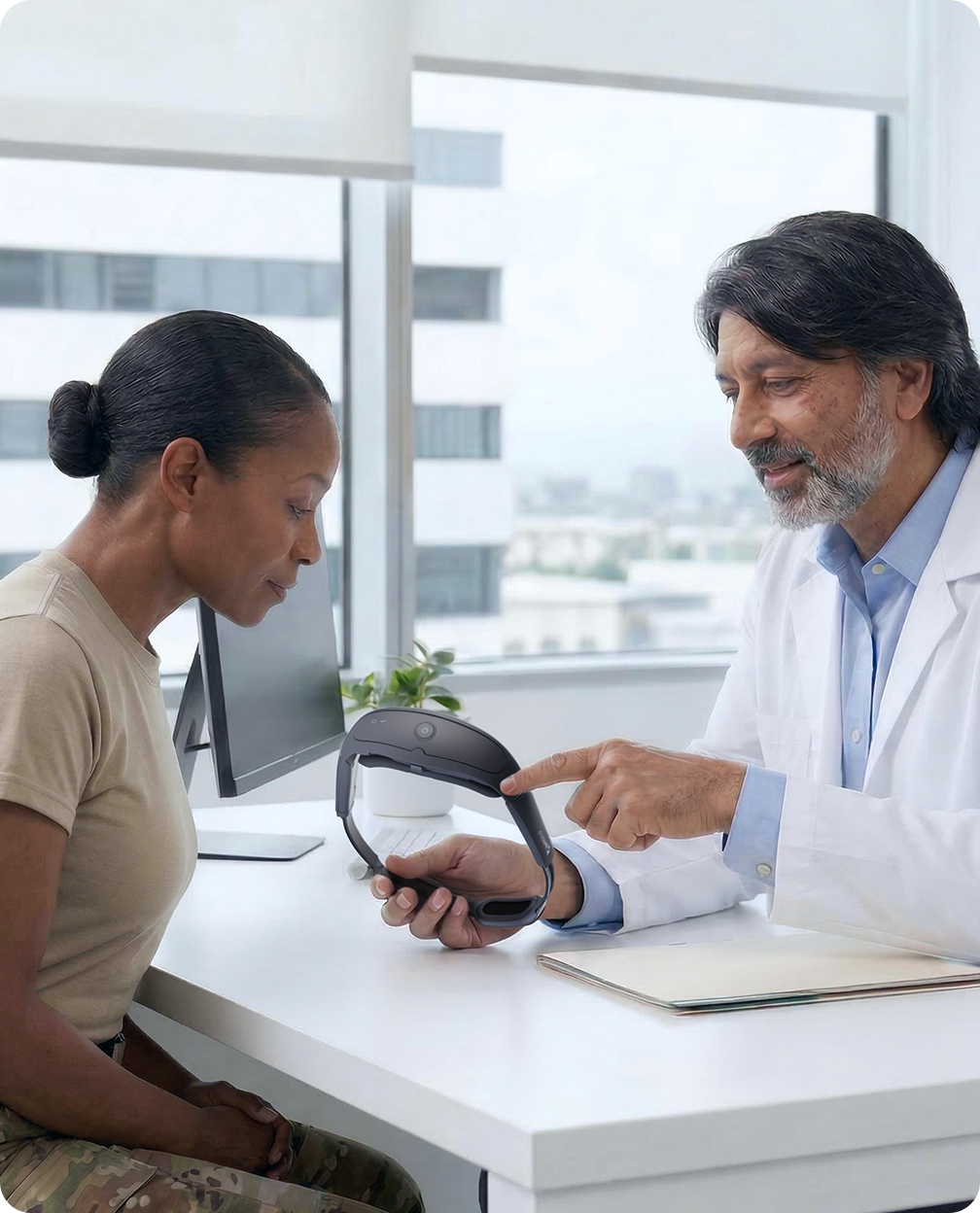
How Proliv®Rx fits into clinical workflow
Integrates into behavioral health and primary care pathways with minimal disruption
Proliv®Rx adds a next-step therapeutic option without changing existing clinical routines. Physicians evaluate patients and prescribe Proliv®Rx as they normally would, while Neurolief manages all operational and logistical components.
This allows physicians to maintain their regular care cadence while patients complete a structured home-based therapy program.
Structured home-based
therapy program

The clinician identifies a patient who has not adequately responded to antidepressants and prescribes Proliv®Rx.
& onboarding

Neurolief can manage all logistics, including:
- Proliv®Rx & pads shipment
- Proliv®Rx activation
- Training on proper Proliv®Rx placement
- App setup and use
- Safety orientation
Clinics do not have to handle Proliv®Rx distribution or technical support.

Patients complete two daily therapy sessions over 8 or 16 weeks within a prescribed program.
The Proliv®Rx app provides:
- Placement verification
- Step-by-step session guidance
- Automated adherence reminders
- Safety prompts
- In-app PHQ-9 assessments
Neurolief actively supports patients throughout the program.

Physicians stay in control – they determine when to check on their patients and can monitor progress remotely. There’s no need for extra visits or staff time unless the physician feels it’s necessary.
& clinician

Upon completion of the therapy program, the clinician evaluates treatment outcomes and determines whether to:
- Continue to another Proliv®Rx therapy cycle
- Transition care
- Conclude and return Proliv®Rx
Neurolief manages Proliv®Rx retrieval or continuation logistics.
The therapeutic mechanism behind Proliv®Rx
Clinically established brain neuromodulation - optimized for effectiveness and access
Neuromodulation therapies such as Transcranial Magnetic Stimulation (TMS) and Electroconvulsive Therapy (ECT) are clinically established next-step treatments for patients who do not respond adequately to antidepressants. Proliv™Rx builds on this foundation by translating proven neuromodulation principles into an effective, more accessible solution – supporting structured, at-home treatment under clinical oversight and facilitating earlier adoption in the care pathway.
Where next-generation engineering meets neural precision
Advanced multi-channel targeted neuromodulation
- Proprietary architecture integrating six electrodes (NeuroPorts) and three adaptive stimulation channels, dynamically modulating output in real time to deliver optimized neuromodulation throughout the treatment session.
- Targeted afferent stimulation with anatomical precision, positioning each electrode directly over its designated nerve pathway to ensure focused and reproducible activation.
- Distinct capability to non-invasively stimulate the greater occipital nerve branches, effectively overcoming the hair barrier to enable consistent nerve engagement.
- Miniaturized, high-efficiency electronics engineered for high-performance output, delivering powerful stimulation safely and comfortably to enhance therapeutic effectiveness and clinical outcomes.
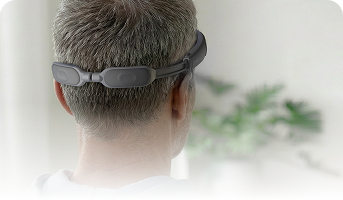
- Proprietary specially designed wearable headset (NeuroRouter) with integrated NeuroPorts that facilitate sufficient electrical conduction.

Engaging core brain regions associated with depression
Proliv®Rx utilizes a multi-channel, focal afferent stimulation architecture designed to engage neural networks involved in depression. It is the first non-invasive medical technology designed to simultaneously stimulate both the occipital and trigeminal pathways, enhancing the neuromodulatory impact on the brain.
- Three independent output channels deliver proprietary patterned stimulation across six NeuroPorts.1,2
- Concurrent activation of trigeminal (frontal) and occipital (posterior) nerve pathways.1,2
- The afferent inputs converge at the trigemino-cervical complex (TCC), a recognized brainstem relay hub.1,2
- Signals project to additional brainstem nuclei involved in autonomic regulation, arousal, and neurotransmitter modulation, and to higher subcortical and cortical regions associated with depression.1,2,3,4
By combining multi-channel delivery with focal neural targeting, Proliv®Rx engages multiple interconnected neural pathways through a bottom-up neuromodulatory mechanism, which influence brain networks associated with depressive symptomatology.
- 1 Adair D, Truong D, Esmaeilpour Z, Gebodh N, Borges H, Ho L, et al. Electrical stimulation of cranial nerves in cognition and disease. Brain Stimul 2020;13:717-50.
- 2 Cook IA, Espinoza R, Leuchter AF. Neuromodulation for depression: invasive and noninvasive (deep brain stimulation, transcranial magnetic stimulation, trigeminal nerve stimulation). Neurosurg Clin N Am 2014;25:103-16
- 3 Matharu MS. Central neuromodulation in chronic migraine patients with suboccipital stimulators: A PET study. Brain 2004;127:220–30.
- 4 Aston-Jones G, Shipley MT, Chouvet G, Ennis M, van Bockstaele E, Pieribone V, et al. Afferent regulation of locus coeruleus neurons: Anatomy, physiology and pharmacology. Prog Brain Res 1991;88:47-75
Neuromodulation of brain networks via the occipital and trigeminal afferents
- Influences depression-related regions via the nucleus tractus solitarius (NTS), regulating autonomic and stress responses.1,2
- Engages connections with the locus coeruleus (LC), modulating norepinephrine for mood, stress, and arousal.1,2
- Interacts with the raphe nuclei (RN), regulating serotonin (5-HT) for mood and emotional processing.1,2
- 1 Adair D, Truong D, Esmaeilpour Z, Gebodh N, Borges H, Ho L, et al. Electrical stimulation of cranial nerves in cognition and disease. Brain Stimul 2020;13:717-50.
- 2 Cook IA, Espinoza R, Leuchter AF. Neuromodulation for depression: invasive and noninvasive (deep brain stimulation, transcranial magnetic stimulation, trigeminal nerve stimulation). Neurosurg Clin N Am 2014;25:103-16
- Enhances cerebral blood flow in the dorsal rostral pons,3 which houses the locus coeruleus (LC)- the brain’s main source of norepinephrine, regulating arousal, attention, and stress.3,4
- Affects the anterior cingulate cortex (ACC) – critical for processing negative emotions and cognitive control of affective responses.3
- 3 Matharu MS. Central neuromodulation in chronic migraine patients with suboccipital stimulators: A PET study. Brain 2004;127:220–30.
- 4 Aston-Jones G, Shipley MT, Chouvet G, Ennis M, van Bockstaele E, Pieribone V, et al. Afferent regulation of locus coeruleus neurons: Anatomy, physiology and pharmacology. Prog Brain Res 1991;88:47-75
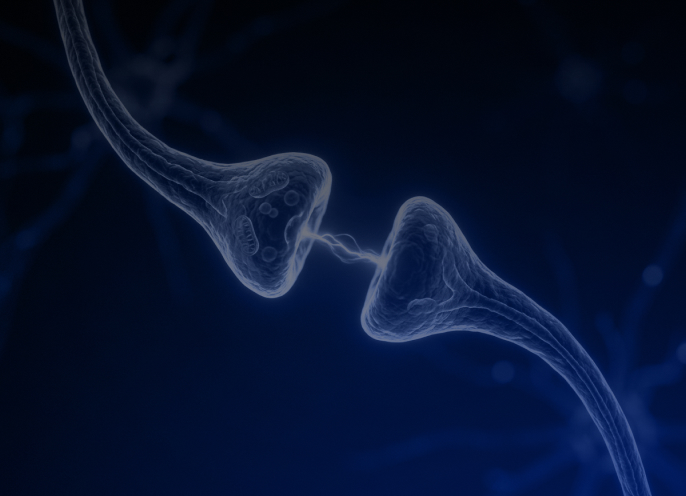
In Proliv®Rx clinical study, 87% improved by one or more depression severity levels and 31.7% of these difficult to treat patients reached full remission
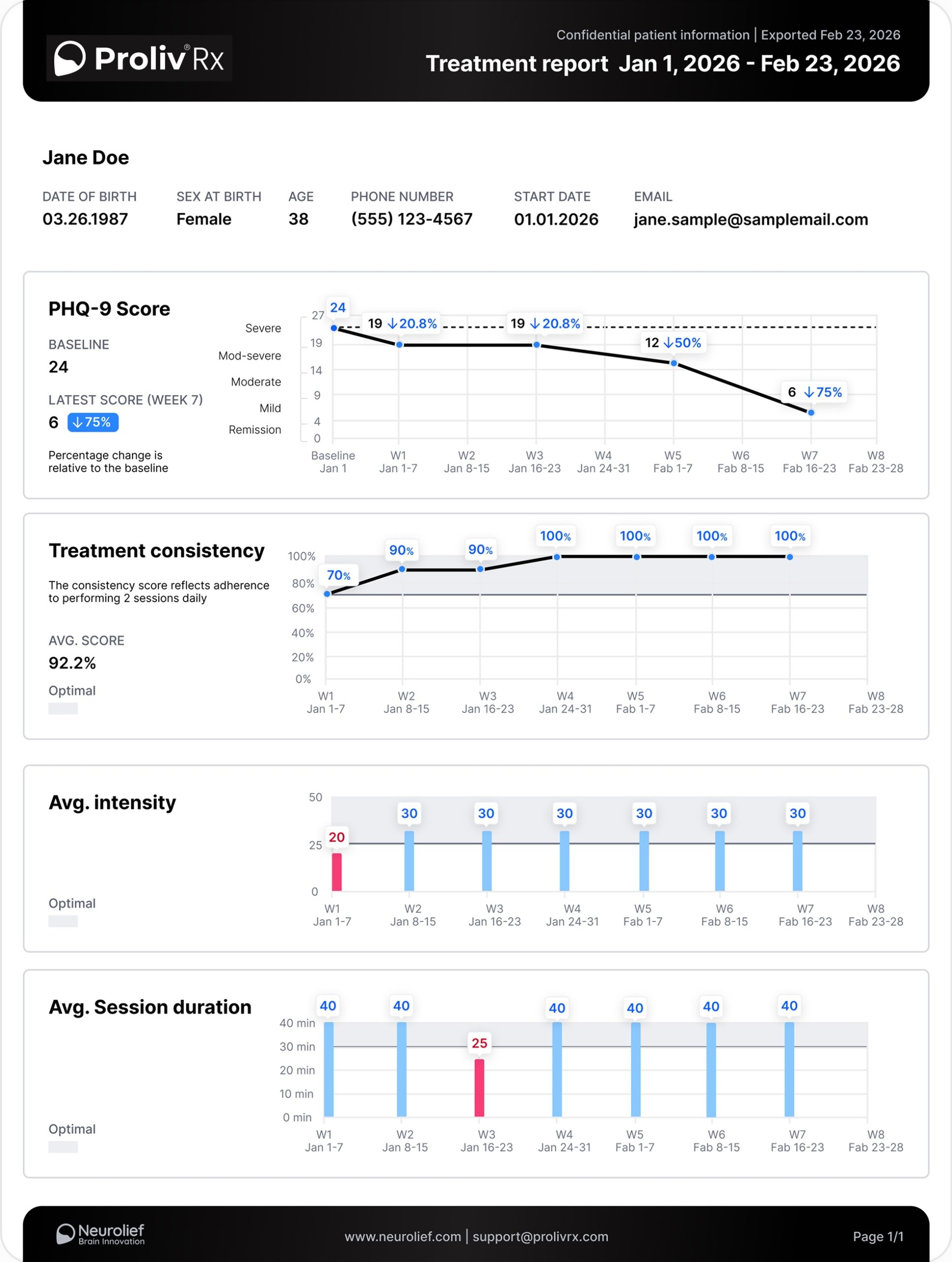
Keeping the physician informed throughout the program
The physician maintains visibility into treatment progress through structured program reports, which can be shared during visits or via secure messaging.
Throughout the 8‑week program, patients can generate a comprehensive progress report directly from the Proliv™Rx app. The report summarizes key treatment metrics, giving physicians a clear, concise snapshot of therapy adherence and patient progress over time.
Each report includes:
- Session completion & adherence – total sessions completed, missed sessions, and adherence rate.
- Standardized symptom tracking – PHQ-9 scores at baseline and every two weeks throughout the course of treatment.
- Intensity levels & adjustments – automatic and patient-adjusted stimulation levels.
- Program outcome – patient progress and overall program summary.
- Program completion status – confirmation that the full treatment course was completed.
A guided, structured experience patients complete at home