
Clinical evidence & safety
FDA-approved outcomes in patients who did not respond to standard depression treatments
Clinical data from prospective studies evaluating the safety and effectiveness of Proliv™Rx in adults with inadequate response to antidepressant therapy — a population historically harder to treat and underserved by existing options.
Indication for Use
The Proliv™Rx System provides focal external Combined Occipital and Trigeminal Afferent Stimulation (eCOT-AS) treatment. It is intended as an adjunctive treatment for Major Depressive Disorder (MDD) in adults who failed to achieve satisfactory improvement from at least one previous antidepressant medication, for use at home or in clinic. It is a prescription-only device.

The MOOD Study: landmark clinical evidence in major depressive disorder
A prospective, multi-center randomized controlled trial (RCT) evaluating the safety and effectiveness of Proliv™Rx in adults with Major Depressive Disorder (MDD) who had not improved on antidepressant medication.
Key study characteristics
- Adults with MDD and inadequate response to 1–4 antidepressants
- Randomized, double-blind, sham-controlled design
- Conducted at 13 clinical sites
- 8-week blinded treatment period → followed by 8-week open-label phase
- Participants self-administered the Proliv™Rx therapy at home, completing two 40-minute sessions per day, 5–7 days per week.
Efficacy in patients with prior inadequate response to antidepressants

- Point one – Text about what it means
- Point two – Text about what it means
Substantial improvement was observed after 8 weeks of therapy and was either maintained or further improved at 16 weeks.
More than two-thirds of patients achieved clinically substantial improvement, and nearly one-third reached full remission by Week 16.
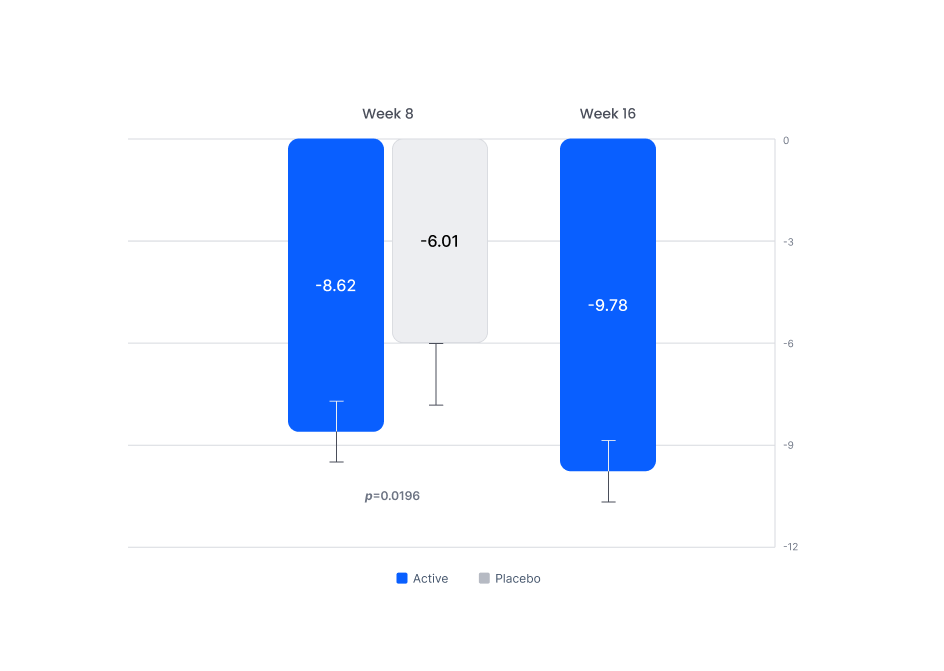
TOOOL TIIIP
Substantial improvement was observed after 8 weeks of therapy and was either maintained or further improved at 16 weeks.
More than two-thirds of patients achieved clinically substantial improvement, and nearly one-third reached full remission by Week 16.
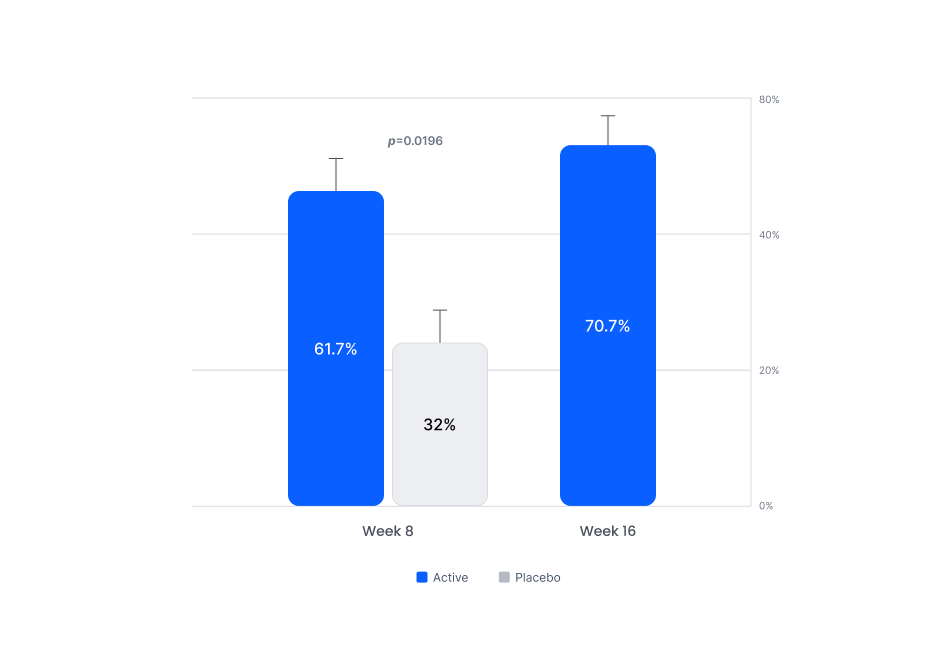
TOOL
Substantial improvement was observed after 8 weeks of therapy and was either maintained or further improved at 16 weeks.
More than two-thirds of patients achieved clinically substantial improvement, and nearly one-third reached full remission by Week 16.
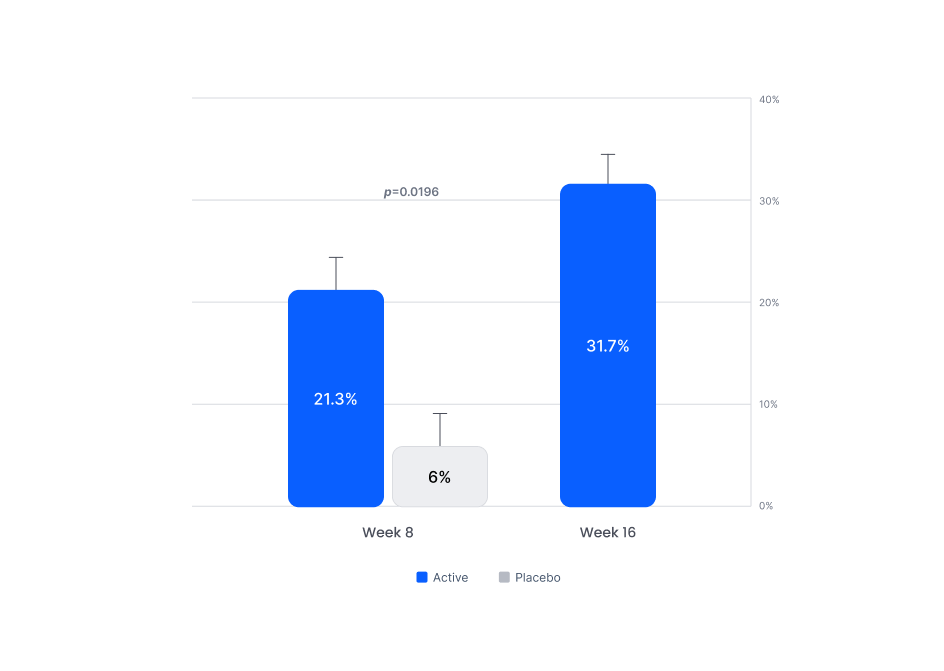
Improvement in depression severity level
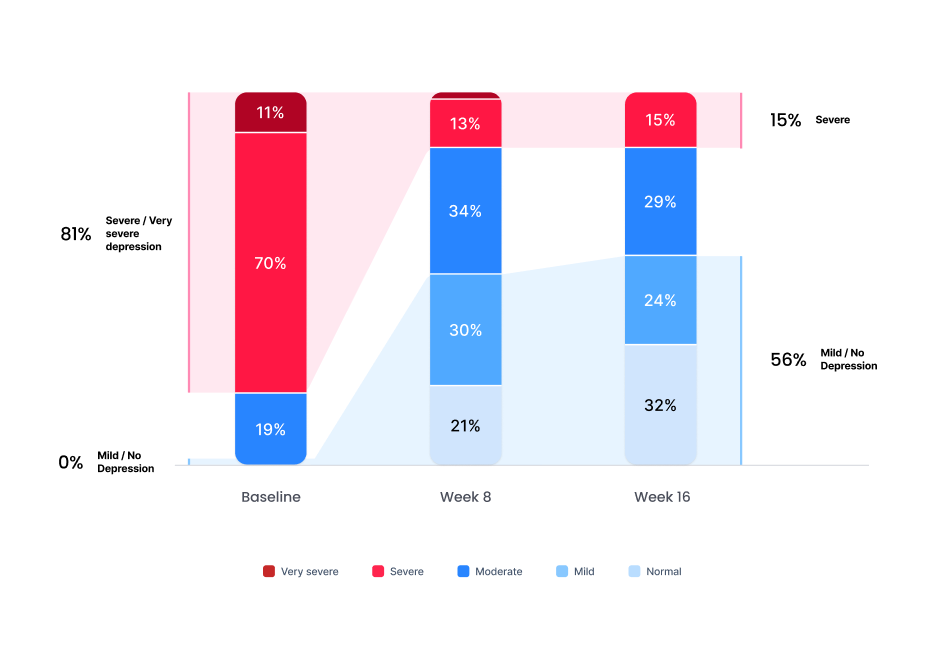
Patients with prior antidepressant treatment failure showed considerable improvement following the Proliv™Rx therapy program, characterized by a shift to a lower depression severity level.
top
Patients with prior antidepressant treatment failure showed considerable improvement following the Proliv™Rx therapy program, characterized by a shift to a lower depression severity level.
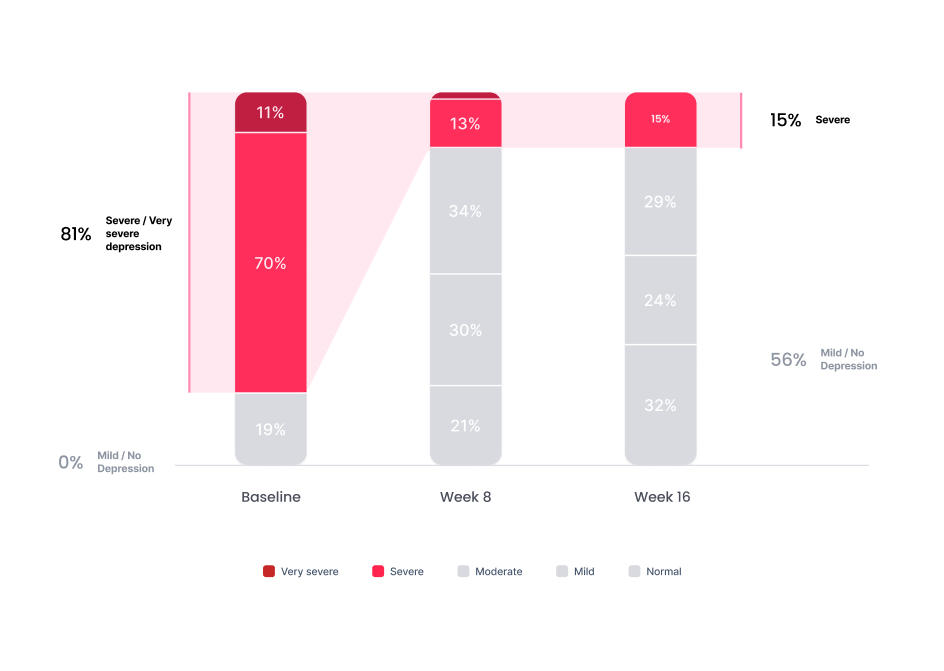
Patients with prior antidepressant treatment failure showed considerable improvement following the Proliv™Rx therapy program, characterized by a shift to a lower depression severity level.
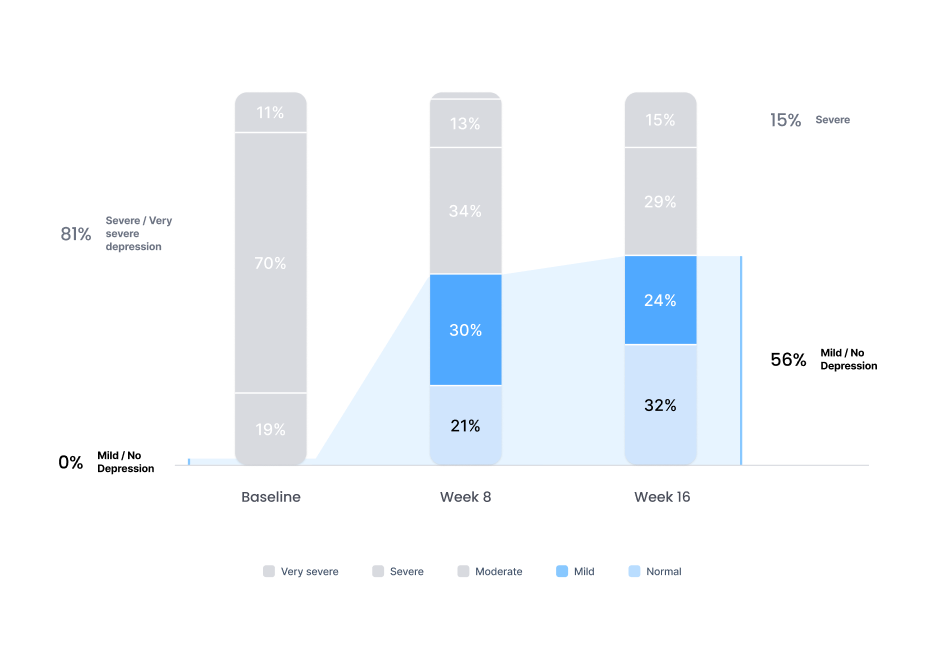

Depression severity levels: Very Severe, Severe, Moderate, Mild, No Depression. After completion of a 16-week therapy program.
Proliv™Rx: key clinical outcomes after antidepressant failure
Faforable safety profile
Proliv™Rx was well tolerated in clinical studies, with no device-related unanticipated serious adverse events reported. Observed adverse events were generally mild to moderate in severity and transient in nature. The most commonly reported adverse events included scalp numbness, localized skin reactions at the electrode sites, and headache.